When a horse lies down and won't get up, it's not just tired—it's screaming for help. This isn't normal resting behavior. A healthy horse stands most of the day, even while sleeping. When it drops and stays down, something is seriously wrong. This is a medical emergency, and kůň leží a nevstává, stav, kdy kůň nemůže nebo nechce vstát, což může být příznakem vážného fyzického problému. It could be colic, muscle damage, neurological issues, or even a heart problem. Waiting even an hour can cost the horse its life.
Don't confuse this with normal lying down. Horses do lie down to sleep deeply—but only for short periods, and they usually get up quickly. If your horse is lying on its side for more than 20–30 minutes, especially if it’s sweating, panting, or rolling, it’s not resting—it’s suffering. kolika u koní, závažné trávicí onemocnění, které způsobuje silnou bolest a ztrátu pohybu is one of the most common reasons. Other possibilities include myopatie u koní, svalové onemocnění, které může způsobit náhlou slabost a selhání, laminitis, or even a spinal injury. You won’t see obvious wounds or swelling. The signs are subtle: the horse looks dull, doesn’t eat, doesn’t pass manure, and refuses to move even when encouraged.
What should you do? First, don’t try to pull or force it up. That can hurt the horse or yourself. Call your vet immediately. While waiting, keep the horse calm and warm. If it’s cold or wet, cover it with a blanket. Check if it’s passing manure or urine—any change matters. If it’s trying to get up but can’t, gently support its chest to prevent it from lying flat on its side. Time is everything. The longer it stays down, the higher the risk of pressure sores, muscle damage, and organ failure. This isn’t a "wait and see" situation. Every minute counts.
Many owners think, "Maybe it’s just tired after a long ride," or "It’s just old." But horses are prey animals—they hide pain until they can’t anymore. If your horse is lying down and won’t rise, it’s already past the point of discomfort. The signs you’re seeing are the final warning. That’s why regular check-ups, proper feeding, and watching for small changes in behavior are so important. A horse that suddenly stops eating, has a dry nose, or seems less alert? These are early red flags. Don’t wait for the big one.
In the posts below, you’ll find real cases and clear advice on what causes horses to lie down and not get up, how to spot the difference between normal rest and life-threatening illness, and what steps to take before the vet arrives. You’ll also learn about other hidden dangers like colic, muscle disease, and nerve damage—problems that start quietly but end fast. This isn’t theory. It’s what works when your horse’s life is on the line.
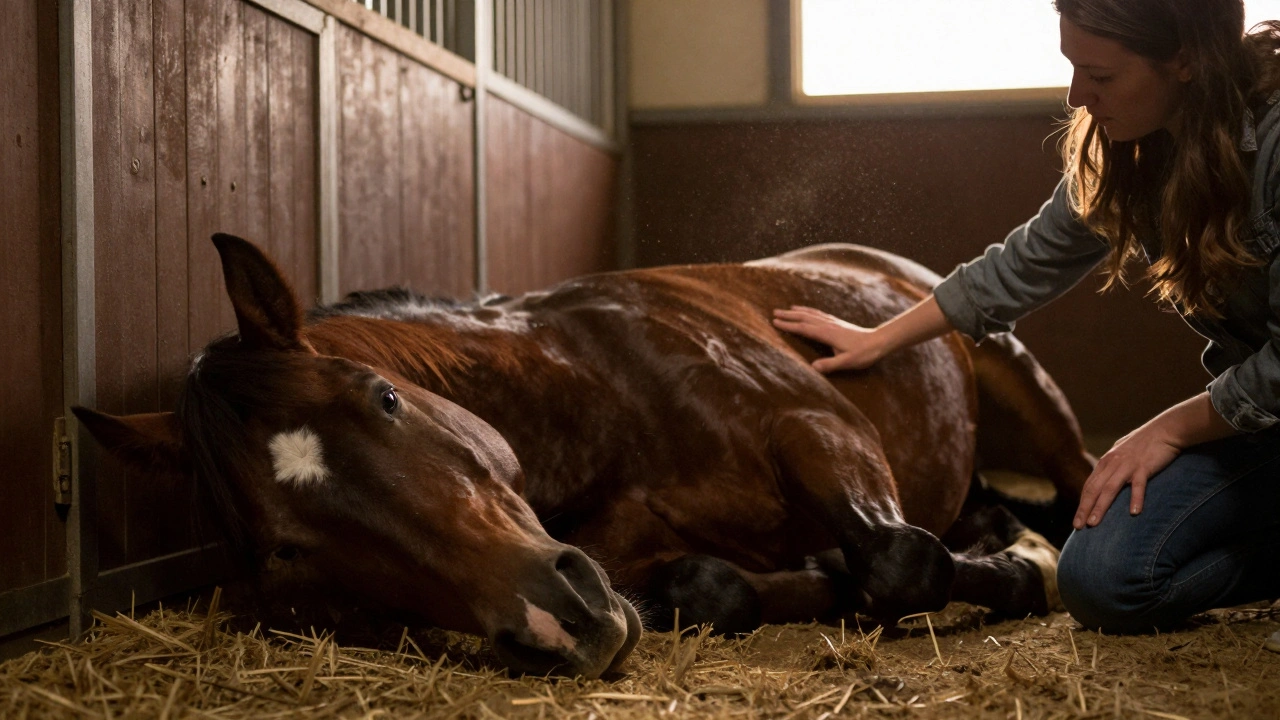
Když kůň leží, není to vždy spánek. Pokud nevstává, může to být příznak koliky, infekce nebo závažného onemocnění. Zjistěte, co dělat, když kůň leží a nevstává, a jak tomu předcházet.